
What's the Definition of Tendering in the UK?
Tendering is a formal process where an organisation invites businesses to bid for a contract. You can think of it as an organised competition. It's designed to make sure the process is fair, transparent, and delivers value for money, especially when public funds are involved.
What Tendering Means in Plain English
Let's ditch the jargon. At its heart, tendering is about creating a level playing field. Instead of just picking a supplier they know, an organisation—often a public body like a local council or the NHS—publishes exactly what it needs. It then invites any qualified business to submit a detailed proposal, or 'bid'.
The whole point is to guarantee fairness and get the best value for taxpayers' money. It’s a competition where suppliers are judged on more than just who’s cheapest. Your bid will usually be scored against a mix of criteria:
- Price: How much the goods or services will cost.
- Quality: The standard of the work or products you're proposing.
- Experience: Hard evidence that you've successfully delivered similar projects before.
- Social Value: The positive impact you can bring to the community or environment.
Why This Definition Matters
Seeing tendering as a formal competition is the first mental shift you need to make to win work. It means your bid documents have to be flawless. You need to answer every question directly and provide all the evidence they ask for. There’s no room for casual emails or vague promises; everything has to be documented and perfectly compliant.
Realising this from day one shows you just how organised you need to be. This is where having a well-structured knowledge base is so useful. You need to find company policies, accreditations, and case studies in seconds to build a strong bid from the start.
A tender isn’t just a request for a price; it's an invitation to prove you're the most reliable partner for the job. Your bid is the evidence.
This formal nature also means you need a system to find these opportunities. A reliable tender monitoring service is crucial for spotting relevant contracts the moment they're published. Without it, you're missing out before you've even begun. Our guide on what is public procurement explains this world in more detail.
Once you find a tender, this is where AI response generation can connect to your knowledge base. It uses your own information to create accurate first drafts. This saves you from the hard work of writing everything from scratch.
Tendering Concepts at a Glance
Getting your head around these core ideas helps you plan your actions more effectively. Here's a quick summary of what these concepts mean for your business.
| Concept | What It Means for Your Business | How Software Can Help |
|---|---|---|
| Formal Process | Every document matters. Compliance is non-negotiable. No corner-cutting. | Structures your responses and ensures all mandatory sections are completed. |
| Competition | You need to stand out. Your bid must be more persuasive than your rivals'. | Provides insights and data to help you build a stronger, evidence-based case. |
| Level Playing Field | The buyer has to follow the rules. This gives you a fair shot, even as an SME. | Manages deadlines and submission requirements so you don't get disqualified on a technicality. |
| Evaluation Criteria | It’s not just about price. Focus your effort on the highest-scoring sections. | AI can analyse criteria to help you prioritise sections and find the best evidence from your knowledge base. |
Ultimately, understanding these fundamentals is about treating tendering as a strategic sales process. With the right approach and tools, it becomes a predictable source of new business.
The Different Types of Tendering Procedures
Not all tenders are the same. A buyer will pick a procedure based on how complex their needs are. Understanding the different types is crucial—it tells you what to expect from the process.
Think of it like hiring someone. Sometimes you post a public advert, and anyone can apply. Other times, you create a shortlist of pre-approved candidates first. Tendering works in a very similar way.
This is where a good tender monitoring service pays for itself. Instead of you digging through dense documents, Bidwell's AI-generated summaries tell you the tender type straight away. You can see at a glance if the process suits your business.
Each procedure, no matter how different, is trying to balance the same core principles.
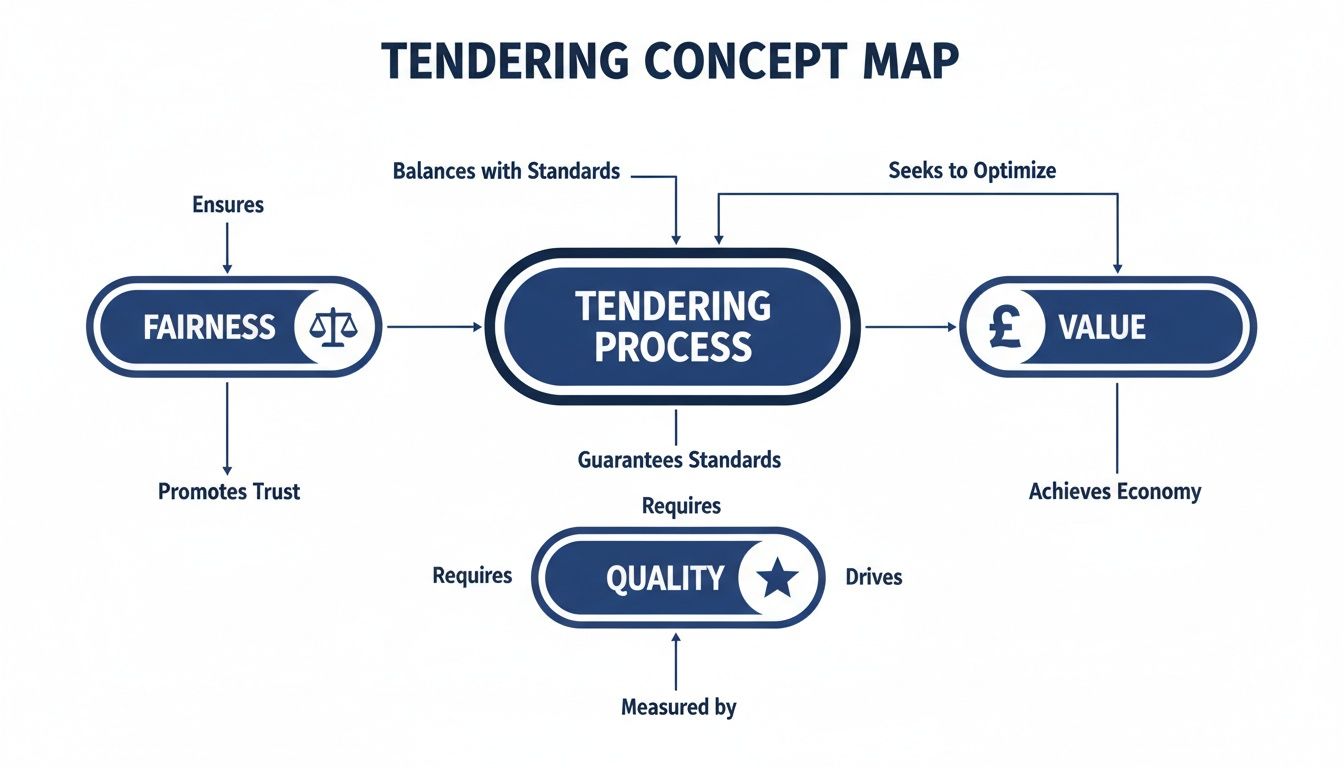
The buyer's goal is to find the supplier who offers the best possible mix of these three elements for the public’s benefit.
Open Tendering
This is the most common approach you'll see. Think of it as that public job advert: any interested business can submit a full bid from the get-go. There’s no pre-qualification stage to get through first.
You’ll typically see this used for standard goods or services where the requirements are clear. The main advantage is its openness—it’s great for new suppliers. The downside? You’ll be up against more competition.
Restricted Procedure
The Restricted Procedure is a two-stage process. First, suppliers complete a pre-qualification questionnaire (PQQ) or Selection Questionnaire (SQ). The buyer then assesses these and invites a shortlist of qualified businesses to submit a full tender.
This approach is popular for more specialised contracts. It saves everyone time by stopping suppliers from preparing a full bid unless they have a realistic shot at winning. For buyers, it means they only evaluate proposals from companies with the right experience.
Competitive Dialogue and Negotiation
What happens when a buyer knows the problem but isn't sure of the best solution? This is where procedures like Competitive Dialogue or a Negotiated Procedure come in. A shortlist of bidders is invited to discuss solutions with the buyer before submitting final bids.
These are for complex, high-value projects like major IT system upgrades. The UK Ministry of Defence, for instance, is awarding larger contracts. In 2023/24, the MOD awarded 21 new contracts valued over £100 million, a clear trend towards projects that require this kind of dialogue.
These procedures take more work, but they give you a priceless chance to showcase your expertise. This is where a well-organised knowledge base becomes essential. You'll need it for pulling out relevant case studies and technical data during those critical discussions.
Framework Agreements
A Framework Agreement is like getting on a pre-approved list of suppliers. A buyer runs a tender to establish a group of suppliers who can provide certain goods or services over a set period, often up to four years.
Once you're on the framework, you can be awarded work through smaller 'call-off' competitions. These are only open to suppliers on that list. It’s an efficient way to win repeat business without a full tender process every time. Our guide on what a framework agreement is explains this popular procedure in detail.
Navigating the Tendering Process Step by Step
The tendering process follows a logical path, even if it looks complicated from the outside. Think of it as a formal journey, from spotting an opportunity to submitting your bid. Don't let the paperwork intimidate you; every step has a clear purpose.
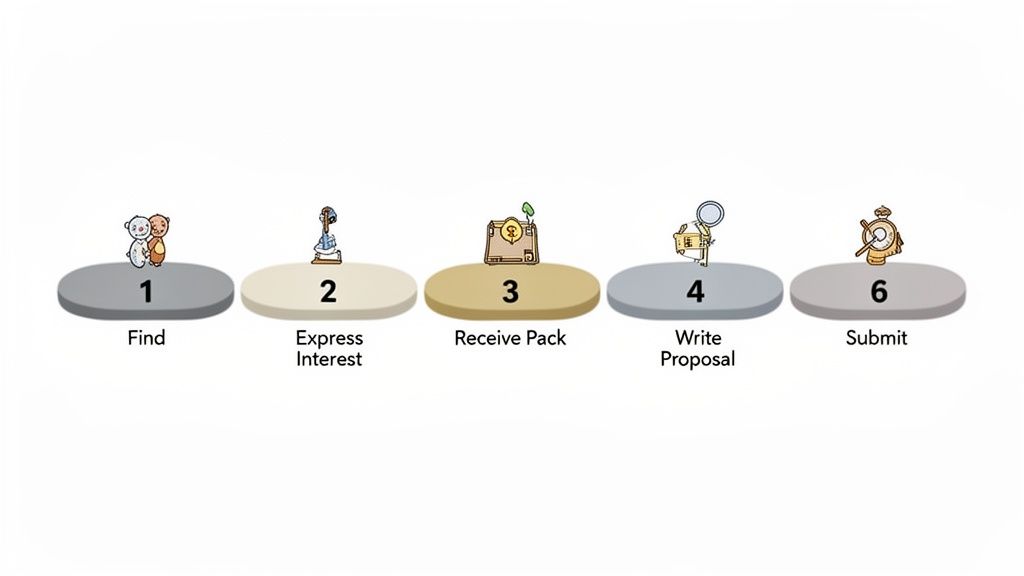
It’s a marathon, not a sprint. Each stage builds on the last. Missing a single step can get you disqualified before you've even started writing. Being organised is your biggest advantage.
The Core Stages of Bidding
The whole thing can be broken down into a handful of key actions. The details might change depending on the tender type, but the overall flow is consistent. Here’s what you can generally expect:
Finding the Tender Notice: This is your starting line. Opportunities are published on portals like Find a Tender. A good tender monitoring service is a lifesaver. It saves you from daily manual searches by sending relevant notices straight to your inbox.
Expressing Interest (EOI): Once you find a tender that looks like a good fit, you'll usually need to formally register your interest on the buyer's portal. This simple step signals your intent and makes sure you receive all documents.
Receiving the Tender Pack: After you express interest, you'll get access to the full tender pack. This includes the specification, contract terms, and the questionnaire you need to answer. It's your complete instruction manual.
Asking Clarification Questions: You'll have a set period to ask the buyer questions about anything that's unclear. This is a crucial step. It helps you avoid misunderstandings and shows you’re paying attention. To keep things fair, all questions and answers are shared with every bidder.
The Most Demanding Step: Writing the Proposal
Now for the hard work. Writing your proposal is where you prove you’re the best choice for the job. This involves answering detailed questions about your experience, your methods, your team, and your pricing.
The main challenge is pulling together lots of information against a tight deadline. This is where a central knowledge base becomes your most valuable asset. Instead of hunting for old documents, you have everything—case studies, policies, CVs—in one organised place.
Instead of spending 40 hours writing from scratch, you can use your curated information to generate a tailored first draft in a few hours. This frees up time to refine your answers and perfect your strategy.
This is where Bidwell's AI response generation makes a real difference. It plugs into your knowledge base, using your own verified information to create accurate, relevant drafts for each question. For a deeper look at what it takes, you can explore our advice on winning a tender.
Finally, you hit the last step: submission. You’ll upload your completed documents to the buyer’s portal. Always make sure to hit the deadline with time to spare. Don't leave it to the last minute.
Getting to Grips with the Rules and Language
When you're bidding for a contract funded by public money, there are strict rules to play by. Understanding the legal frameworks and key terms is essential if you want to win. You don't need to be a legal expert, but you do need to grasp the principles that ensure fairness.
The government regularly issues guidance called Procurement Policy Notes (PPNs). These memos tell public bodies how to apply procurement rules on everything from social value to national crises. Knowing about the major PPNs shows the buyer you understand what’s important to them.
This is where a tender monitoring service is so helpful. Instead of you trying to keep up with every new policy, a platform like Bidwell does the work. It makes sure you’re aware of the latest rules and helps you find opportunities across all the main UK portals.
Demystifying Core Tendering Concepts
To write a winning bid, you need to speak the buyer's language. This means getting comfortable with the concepts they use to evaluate your proposal. They're not just buying a product; they're buying the best possible outcome for the public.
Here are a few terms you'll see again and again:
- MEAT (Most Economically Advantageous Tender): This is the gold standard for judging bids. It means the buyer isn't just looking for the lowest price. They’re weighing up cost, quality, and other factors to find the best value for money.
- Social Value: This is a big deal in UK public procurement. Buyers are now legally required to consider how a contract can deliver wider social, economic, and environmental benefits. This could be anything from creating local jobs to reducing your carbon footprint.
- Find a Tender Service (FTS): This is the UK's official portal for publishing high-value public sector contracts, usually those over £139,688 for central government. If you're chasing the biggest opportunities, you need to watch this site.
Think of these terms as the marking scheme for an exam. They tell you exactly what the buyer cares about, so you can focus on the parts of your bid that will score the most points.
Your company’s approach to social value is a perfect example of information that should live in your knowledge base. When these topics come up, you can instantly pull your pre-approved content. This ensures your answers are always consistent, detailed, and strong.
Following the Money and Getting Paid
Let’s be honest, cash flow is a big worry for any business, especially smaller ones. The good news is the UK government has made prompt payment a priority. Public sector bodies are held to account for paying suppliers on time.
This isn't just a vague promise; it's tracked and publicly reported. For instance, the Ministry of Justice paid 86.56% of its invoices within five days in the final quarter of 2023/24. This kind of reliable payment gives you the confidence to bid. You can read more about the Ministry of Justice procurement performance on their official page.
With an organised knowledge base and tools like AI response generation, you can quickly produce bids that tick all these legal and commercial boxes. This turns a complex process into something more manageable.
The Classic Tendering Mistakes (and How to Avoid Them)
Even seasoned bidders can make mistakes. Winning a tender isn’t just about being good at what you do. It’s about avoiding the simple errors that get brilliant bids thrown on the 'no' pile. Once you see tendering as a formal competition with strict rules, you realise how easy it is to get disqualified.
So many businesses make the same mistakes. They hit 'submit' two minutes late or send in generic answers. To an evaluator, these are deal-breakers. Buyers have to follow a rigid scoring process, and a lazy bid gives them a valid reason to kick you out.
Mistake 1: Not Actually Answering the Question
This is the most common pitfall. You scan a question, think you know what the buyer wants, and drop in a polished answer from your last bid. But buyers choose their words carefully. They’re not asking for a general description of your services; they’re asking how you will solve their specific problem.
A generic answer just won't cut it. It signals you haven't listened. This is where modern tools give you an edge. Bidwell's AI response generation is designed to prevent this trap. It uses your company's unique knowledge base to build answers tailored to each question.
Mistake 2: Making Claims Without Evidence
"We are a market-leading provider with a proven track record."
That sounds nice. It also means nothing. Proving it is what scores points. A classic mistake is to fill a bid with bold claims but offer zero proof. If you say you deliver projects on time, back it up with a case study with names, dates, and measurable outcomes.
Your bid is a business case, not a marketing brochure. Every claim should be supported by hard evidence that an evaluator can check and score.
Your knowledge base should be your single source of truth for this. Pack it with approved case studies, testimonials, and performance data. When you need to prove a point, you can instantly find the evidence that turns a weak claim into a high-scoring argument.
Mistake 3: Rushing the Submission
Leaving it all to the last minute is a recipe for disaster. Procurement portals can be clunky, and large files can take ages to upload. Missing the deadline by a few seconds means automatic disqualification. There are no extensions and no second chances.
Always aim to submit your bid at least 24 hours before the deadline. This buffer is your best friend. It gives you breathing room to sort out any unexpected tech issues. Submitting early doesn't just save you stress; it signals that your company is organised and professional.
Your Tendering Readiness Checklist
So, you're thinking about bidding for a contract. Before you spend valuable time, it’s worth asking: is your organisation ready? Being prepared isn't just about having a great product. It’s about having your house in order.
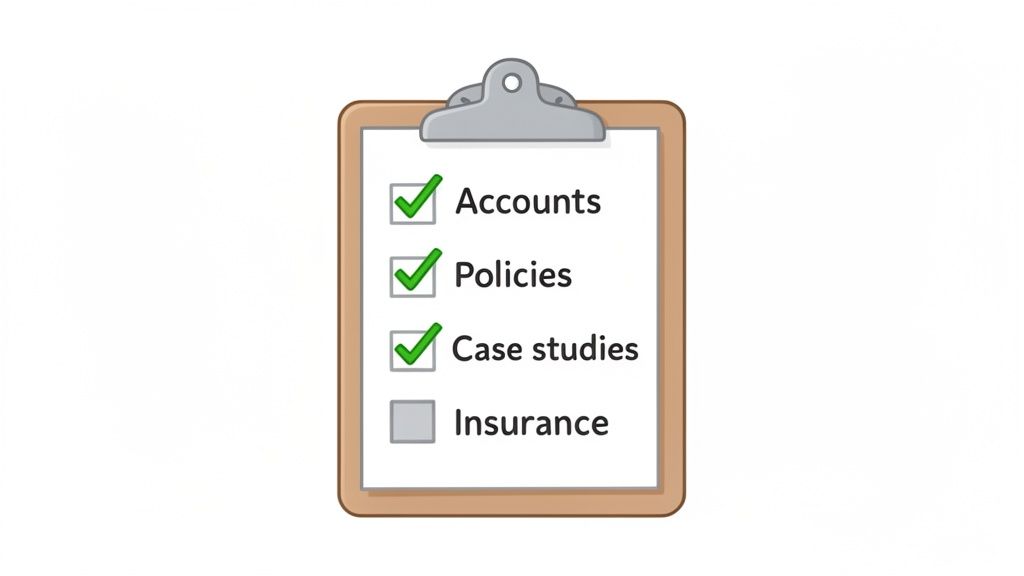
Getting these assets organised upfront is the first step. When the perfect opportunity appears, you'll be able to react quickly instead of scrambling for documents. This collection of documents is the foundation of your knowledge base.
Core Documentation and Proof
Before you even look at a tender document, make sure you have the basics ready to go. Buyers will almost always ask for these. Having them organised in one place is a massive time-saver.
- Company Information: This includes your registered company number, VAT number, and address. Simple stuff, but essential.
- Financials: Have at least two years of audited accounts ready. Many tenders have turnover requirements, and you'll need to prove your financial stability.
- Policies and Procedures: Do you have documented policies for Health & Safety, Quality Management (like ISO 9001), and Environmental Management (like ISO 14001)? You'll be asked for them.
- Insurance Documents: You’ll need current certificates for Public Liability, Employers’ Liability, and Professional Indemnity insurance. Don't wait until the deadline to find one has expired.
Building Your Case
Once you have the compliance documents sorted, you need the evidence that proves you’re the best choice. This is the material that forms the heart of your bid responses.
Your past performance is the best predictor of future success. Make sure your successes are documented and ready to be used as proof in any bid.
Think about collecting:
- Case Studies: Have at least three detailed examples of recent, relevant work. Don't just describe what you did; focus on the problem, your solution, and the measurable results you achieved for the client.
- Team CVs: Pen portraits of the key people who will deliver the contract are vital. They should highlight their specific experience relevant to the work.
- Testimonials: Positive feedback from previous clients adds credibility. A good quote can be more powerful than a page of your own marketing copy.
Still Have Questions? Let’s Clear Things Up
You’ve got the basics, but tendering is one of those things where a few questions always pop up. Here are some quick, straight-to-the-point answers to the questions I hear most often.
What’s the Difference Between a Tender and a Quote?
Think of it like this: a quote is for a simple job. "How much to paint this room?" You get a price, you decide. It’s a straightforward transaction.
A tender is a different beast. It’s a formal, detailed response to an official Invitation to Tender (ITT). You’re not just providing a price. You’re being evaluated on your entire approach—your methodology, your team, and your quality controls.
How Long Does the Tendering Process Take?
This varies a lot, and it all comes down to complexity. For a straightforward local council contract, you might have just four to six weeks from publication to the deadline.
But for a major central government project, the process could easily stretch to six months or more. This is especially true if it involves multiple stages, like a Restricted Procedure or Competitive Dialogue.
Can Small Businesses Actually Win Tenders?
Absolutely. In fact, the UK government has a target to spend £1 in every £3 with small and medium-sized enterprises (SMEs). Buyers are actively encouraged to work with smaller suppliers.
Why? SMEs often bring local knowledge and innovative ideas. The key is to pick your battles. Focus on opportunities where your expertise gives you an edge and craft a bid that proves you can deliver. A sharp bid from an SME can easily outperform a generic one from a bigger company.
Ready to stop just reading about tenders and start winning them? Bidwell helps you find the right opportunities, build a powerful knowledge base, and use AI to generate tailored bids in hours, not weeks. Discover how Bidwell can help you win.


