
What does a bid writer do?
So, what does a bid writer actually do?
Forget the dry job title. Think of them as a project manager, storyteller, and compliance expert all rolled into one. Their entire job is to write detailed, persuasive documents. The goal is to convince a buyer your company is the only choice.
They are professional persuaders. Their weapon is a well-structured, evidence-backed proposal.
The Three Hats of a Bid Writer
A great bid writer does more than just write. To get a winning proposal over the line, they wear a few different hats, often at the same time. It's a juggle of research, coordination, and precise writing.
The job is about knowing how to write business proposals that actually win clients. But how they get there involves a three-step journey.
Detective Work Comes First
Before writing a single word, the bid writer puts on their detective hat.
Their first job is to find the right opportunities. This used to mean scrolling through government portals for hours. Now, a tool like Bidwell’s tender monitoring automates that process. The right tenders land in their inbox, saving a huge amount of time.
Once they have an opportunity, the real investigation starts. They dissect the buyer’s documents, hunting for key requirements and evaluation criteria. This analysis ensures the final proposal is 100% compliant and answers the questions. No guesswork allowed.
Crafting a Compelling Story
Next, the bid writer becomes a storyteller. They don’t just list facts and figures. They weave a narrative that shows off the company’s strengths in the best possible light.
This part involves interviewing experts across the business. They'll talk to everyone from the tech team to the operations floor. They dig through company records to find evidence to back up claims.
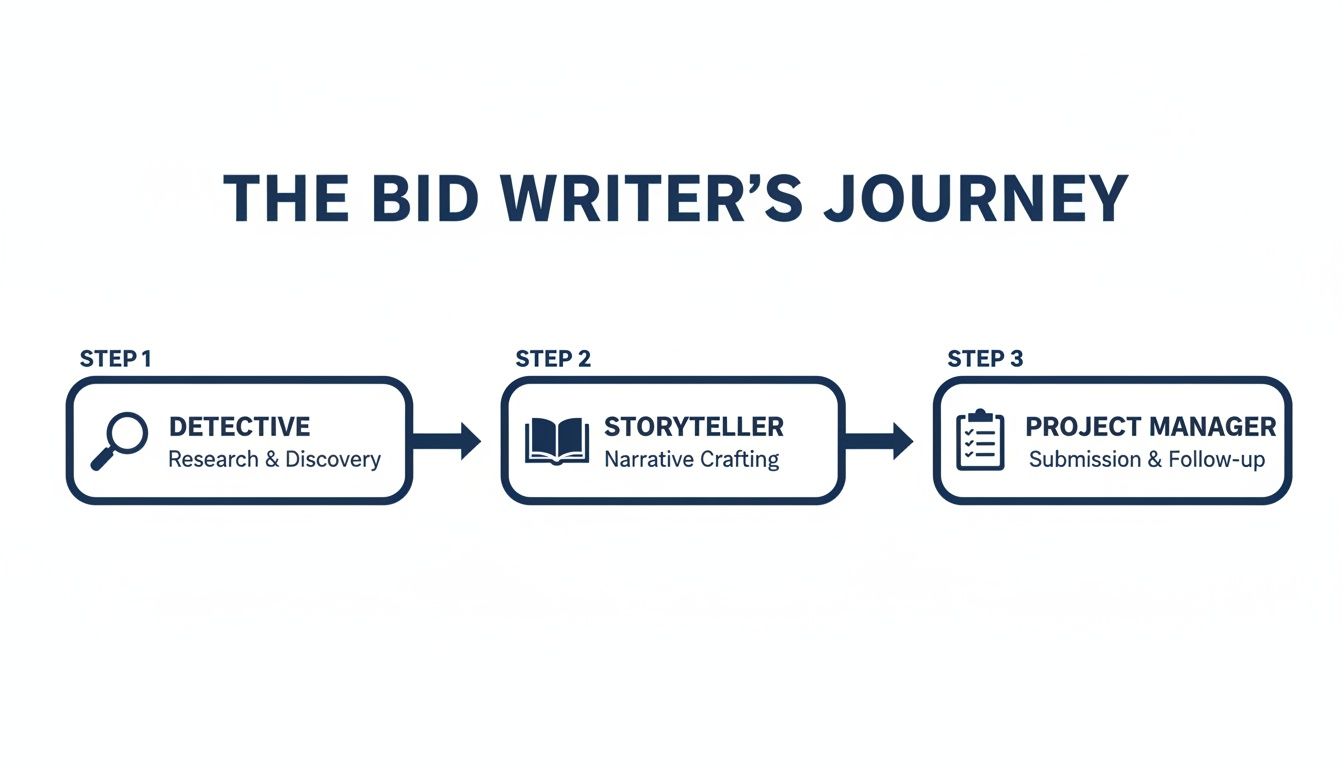
The process moves from analysis to creation, then to management. This storytelling part is where a central knowledge base, like the one in Bidwell, is a huge help. All the best case studies, team CVs, and company info are stored in one place.
With AI response generation, a bid writer can create a structured first draft in minutes. This frees them up to focus on high-value work. They can refine the story, sharpen the arguments, and add strategic touches.
The Project Manager Finishes the Job
Finally, with the story crafted, the bid writer becomes a project manager. This is about coordination and control.
They are the central hub. They chase information from different departments and manage reviews with senior stakeholders. They make sure every single deadline is hit. They're the ones keeping everything on track when the pressure is on.
The bid writer owns the process from start to finish. It’s a role that demands meticulous organisation and a calm head.
A Bid Writer's Core Responsibilities at a Glance
| Phase | Key Action | How Bidwell Helps |
|---|---|---|
| 1. Opportunity Finding | Scours portals and procurement sites to find relevant tenders. | Tender Monitoring finds and delivers relevant opportunities directly to your inbox. |
| 2. Bid/No-Bid Decision | Analyses tender documents to assess suitability and winnability. | AI Summaries provide a quick overview of requirements so you can make faster decisions. |
| 3. Content Planning | Creates a response plan and assigns tasks to subject matter experts. | The Bid Dashboard keeps all tasks, deadlines, and responsibilities in one place. |
| 4. Information Gathering | Interviews internal experts and collates evidence like case studies and CVs. | A central Knowledge Base stores all your company evidence for instant access. |
| 5. Response Writing | Drafts compelling, compliant, and evidence-based answers to all questions. | AI Response Generation creates tailored first drafts using your own company data. |
| 6. Review and Refinement | Manages feedback from stakeholders and polishes the final document. | Centralised document management avoids version control chaos during reviews. |
| 7. Submission | Compiles all documents and submits the final bid on time. | Tracks deadlines and ensures all components are ready for a smooth submission. |
You can see the role is far more strategic than just writing. A good bid writer orchestrates the entire process.
The Daily Routine of a Bid Writer
Forget any image of a writer quietly typing in a corner. A bid writer's day is a fast-paced mix of project management and detective work. It’s a dynamic role where priorities can shift instantly.

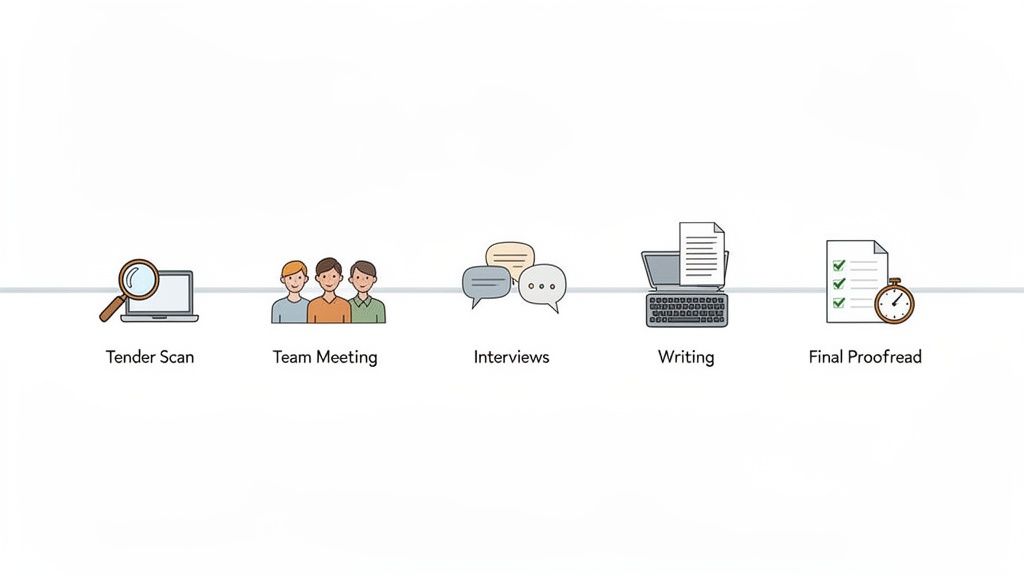
The morning often kicks off with a hunt for new opportunities. This used to mean trawling through multiple procurement portals. With Bidwell’s tender monitoring, this first step is automated. Relevant tenders land straight in their inbox.
Morning Focus: Analysis and Planning
The first half of the day is about strategy and organisation. Once a promising tender is found, the bid writer dissects the documents. They create a compliance checklist and map out a timeline.
This planning phase is critical. A typical morning might involve:
- Deconstructing the Tender: Reading every line of the buyer's documents to understand scoring criteria and spot red flags.
- Kick-Off Meetings: Organising and leading meetings with the sales, technical, and operational teams to agree on a winning strategy.
- Assigning Tasks: Delegating questions to subject matter experts (SMEs) and setting clear deadlines for their input.
A bid writer is the central coordinator. They make sure everyone knows their role and what's needed from them. They're directing the project to keep it on track from day one.
This organised approach prevents last-minute chaos. By lunchtime, a solid plan is in place.
Afternoon Action: Writing and Collaboration
The afternoon is when writing and collaboration ramp up. This is where the bid writer turns raw, technical information into persuasive responses. They'll spend hours chasing evidence and clarifying details.
For instance, they might be interviewing an operations manager for a method statement. Check out our example of bid writing to see how it all comes together.
This process is simpler with a central knowledge base, like the one inside Bidwell. Instead of chasing the same information for every bid, writers can pull approved content instantly. With AI response generation, they can create a strong first draft in minutes.
Their role then shifts to editor and strategist. They refine the content and add specific insights. The day often ends with a final proofread before heading home.
Essential Skills Every Great Bid Writer Needs
Exceptional writing is just the start. A bid writer's value comes from a unique mix of technical know-how and people skills. This combination turns a good proposal into a winning contract.
Think of it like building a house. You need an architect who can draw the plans (the writing). You also need a site manager to coordinate the trades (the other skills). A great bid writer does both.
The Technical Toolkit
These are the hard skills, the practical abilities that form the foundation.
- Exceptional Writing and Editing: This is the most obvious one. A bid writer must create clear, persuasive, and error-free content. They write everything from executive summaries to detailed method statements. Our guide on how to write a method statement can help here.
- Deep Research Skills: A writer needs to dig into the buyer’s strategy documents and social value policies. This research helps them tailor every word to what the evaluator actually cares about.
- Project Management: Juggling deadlines and chasing information is a huge part of the job. Strong organisational skills are non-negotiable to keep the bid on track.
A bid writer’s attention to detail is their superpower. Missing a single compliance point in a tender document can lead to an automatic disqualification. This wastes dozens of hours of work in an instant.
The People-Person Skills
Technical ability is crucial, but soft skills separate a great bid writer from an average one. They need to be excellent communicators and collaborators. They can't work in isolation.
Their success hangs on their ability to:
- Interview Subject Matter Experts: They must ask the right questions to pull vital information from technical experts. They translate complex details into persuasive prose.
- Build Strong Relationships: A bid writer needs to be a trusted central hub. This trust makes it easier to get the buy-in and information needed to build a strong proposal.
- Stay Calm Under Pressure: Bid deadlines are tight and stressful. A top bid writer remains focused and organised, guiding the team calmly to the submission deadline.
The best bid writers blend these skills seamlessly. They can dissect a complex tender in the morning, then charm an operations manager into giving them a great case study in the afternoon.
The Bid Writer's Toolkit: Technical vs Soft Skills
| Skill Category | Essential Skills | Why It Matters |
|---|---|---|
| Technical | Exceptional Writing & Editing, Research, Project Management, Detail | These form the bedrock. They ensure the final document is compliant, well-structured, and error-free. |
| Soft | Communication, Interviewing, Relationship Building, Resilience | These are the "human" skills. They enable the writer to extract the best information and manage the team. |
These skills ensure the final document is accurate, compliant, and aligned with the buyer’s needs. Tools like Bidwell’s Knowledge Base and AI Response Generation handle the heavy lifting. This lets the writer focus on strategy, persuasion, and refinement.
How a Bid Writer Collaborates with Your Team
A bid writer isn't a lone wolf. Think of them as the central hub of your bid process. They connect with almost every part of the business to get a proposal over the line.
They’re like the director of a film. The director doesn't operate the camera or design the sets. They pull everyone’s specialist skills together to create a single, coherent vision. Without them, you just have a collection of disconnected scenes.
The Key Relationships
To build a winning bid, the writer needs raw material from your experts. A huge part of their day is spent talking to people across the company. They dig for the evidence and technical detail needed to convince evaluators.
These conversations turn your company's know-how into a persuasive proposal. The main players they’ll work with include:
- Sales and Business Development: This team usually brings in the opportunity. The bid writer works with them to make sure the proposal aligns with the sales goals.
- Operations and Technical Teams: These are your experts on the ground. The bid writer interviews them to understand how you deliver your service.
- Finance Department: The bid writer liaises with the finance team for pricing sections. Their job is to ensure all numbers are accurate and the proposal is commercially sound.
- Senior Leadership: Before anything goes out, the bid writer needs final sign-off. They’ll present the finished proposal to leadership for approval.
Modern Tools Make Collaboration Smarter
This process used to be a nightmare of back-and-forth emails. Modern tools have changed the game. Instead of starting from a blank page, a writer using a platform like Bidwell can work more efficiently.
The old way meant a bid writer spent 80% of their time hunting for information and only 20% writing. With a central knowledge library, those numbers flip. They can spend their time on high-value tasks like strategy and polishing the final response.
Instead of interrupting your operations manager for the same project details, the writer can pull approved content from Bidwell's Knowledge Base. This turns a week of information gathering into a few hours of verification.
When it's time to write, Bidwell’s AI Response Generation uses this verified content to create a first draft. This gives the team a solid starting point for review. Collaboration becomes about improving a strong draft, not creating one from scratch.
How AI Is Reshaping the Bid Writer's Role
The bid writer's world is changing because of AI. The job used to involve a lot of manual graft. A single tender response could easily take 20-40 hours, mostly on repetitive tasks.
That way of working is on its way out. AI platforms aren't replacing bid writers; they're upgrading them. The focus is shifting from pure writing to high-level strategy.
From Writer to Strategic Editor
With AI, the job is no longer about staring at a blank page. A tool like Bidwell can generate a complete, relevant response in a fraction of the time.
How does that actually work?
- It Starts with Your Information: First, your best company content is organised into a central Knowledge Base. Think case studies, policies, team CVs, and past successful responses.
- AI Crafts the First Draft: When a new tender lands, the AI response generation kicks in. The AI reads the buyer's questions and uses your Knowledge Base to write detailed answers.
- The Human Touch Adds the Value: The AI produces a solid first draft. The bid writer’s job is then to review, refine, and add strategic insights that only a human can. They'll check the tone, add client-specific details, and ensure the story is compelling.
This changes what a bid writer does day-to-day. They spend less time on administrative slog and more time thinking like the buyer. They can sharpen the win themes and make the proposal stand out.
The role is evolving from a content creator to a content curator and strategist. The AI handles the heavy lifting of drafting, freeing up the bid writer to focus on persuasion and quality control.
The Impact on Performance
This new approach has a massive impact. A bid writer can handle more bids without quality dropping. In fact, quality often goes up because there's more time for strategic thinking.
As AI gets smarter, understanding how it affects business functions is key. Looking into how AI is transforming corporate training offers a glimpse into the future of content creation.
The core benefit is simple: submitting more high-quality bids means a higher chance of winning. This feeds directly into the company's bottom line. For SMEs, this kind of efficiency is vital. A solid response template for an RFP can give you a structured foundation.
How to Hire the Right Bid Writer
Bringing a bid writer into your business is a big step. Get it right, and you’ll have a specialist focused on winning you contracts. Get it wrong, and you could waste time and money.
How do you find the right person? Start by being honest about what you need. Are you looking for a bid manager to run the whole show? Or do you need a pure writer to turn complex information into a compelling story?

Full-Time Employee vs Freelance Consultant
Your first decision is whether to hire a permanent employee or a freelance consultant. A full-time writer becomes embedded in your company. They learn your culture and your unique strengths. This is the way to go if you plan to bid regularly.
A freelance consultant offers flexibility. You can bring them in for a specific, high-stakes tender. They often bring experience from different industries but will need a clear brief to get up to speed.
In the UK, skilled bid writers are in high demand. A permanent Bid Writer earns an average basic salary of £45,884, up 2.6% since 2022. Freelance contractors average around £602 per day. You can find more salary guidance from Bid Solutions.
Key Questions to Ask in an Interview
In the interview, you need to probe for more than just good grammar. Your goal is to find out if they have the project management and people skills to deliver under pressure.
Here are a few questions that will help:
- "Walk me through your process for a tender you’ve recently worked on." This reveals their organisational skills and how they structure their work.
- "How do you handle uncooperative subject matter experts?" This tests their resilience and people skills, which are crucial for getting information from busy teams.
- "Describe a time you turned a complex technical solution into a simple, persuasive argument." This gets to the heart of the job. It assesses their ability to translate jargon into a narrative an evaluator will understand.
- "How familiar are you with tools like tender monitoring or AI response generation?" This shows if they’re up-to-date with modern ways of working, like the help offered by platforms like Bidwell.
A good candidate will answer with specific examples. Their answers will reveal their experience and whether their approach is a good match for your business.
Got Questions About Bid Writers?
Good. It’s a specialised role, so it’s worth understanding the details. Let's tackle a few common questions.
What's the Difference Between a Bid Writer and a Bid Manager?
Think of it like a film crew. The Bid Writer is the scriptwriter. They focus on crafting the perfect words to tell the story.
The Bid Manager is the director. They’re in charge of the whole production, from strategy and deadlines to coordinating the different "actors". The manager owns the project; the writer owns the content.
In smaller companies, one person often wears both hats. As you grow, separating the roles allows the writer to focus purely on creating brilliant content.
Can’t Our Sales Team Just Write the Bids?
It’s a tempting thought. Your sales team knows your product and can sell well. But bid writing is a different sport.
A sales pitch is about persuasion and relationships. A tender response is about compliance, evidence, and scoring points against a rigid matrix. It's less of a conversation and more of an exam. A dedicated bid writer understands this world.
How Long Does It Take to Write a Tender Response?
Brace yourself. Without the right tools, a standard public sector tender can easily take between 20 and 100 hours of your time. That’s a huge drain on resources.
This is exactly why businesses are turning to platforms like Bidwell.
Instead of starting from a blank page, you can use a central knowledge base and AI response generation to slash that writing time. A task that once took a full week can be cut down to just a few hours of reviewing and polishing.
Ready to stop spending weeks on a single tender? See how Bidwell can help you find relevant contracts and generate tailored responses in a fraction of the time. Learn more about Bidwell.


